
WAYFINDING
+ sublime synchronicity!

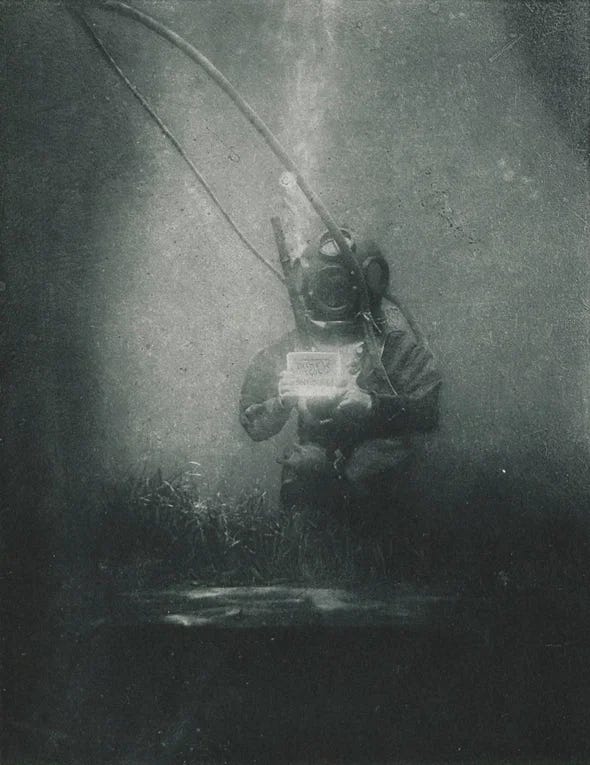

Were there a Gone Fishin’ sign for the psyche, I would have hung it ‘round my neck this past month.
On the physical plane, I took an all-electric roadtrip there and back again, through the Canadian hinterlands and an island with my kids and hunk. The big sky, the bright, over-exposed landscape, the cold lapis waters, the pleasant all-day-all-night hum of ruddy pink sunburn kissing skin, it was everything.
But metaphysically?
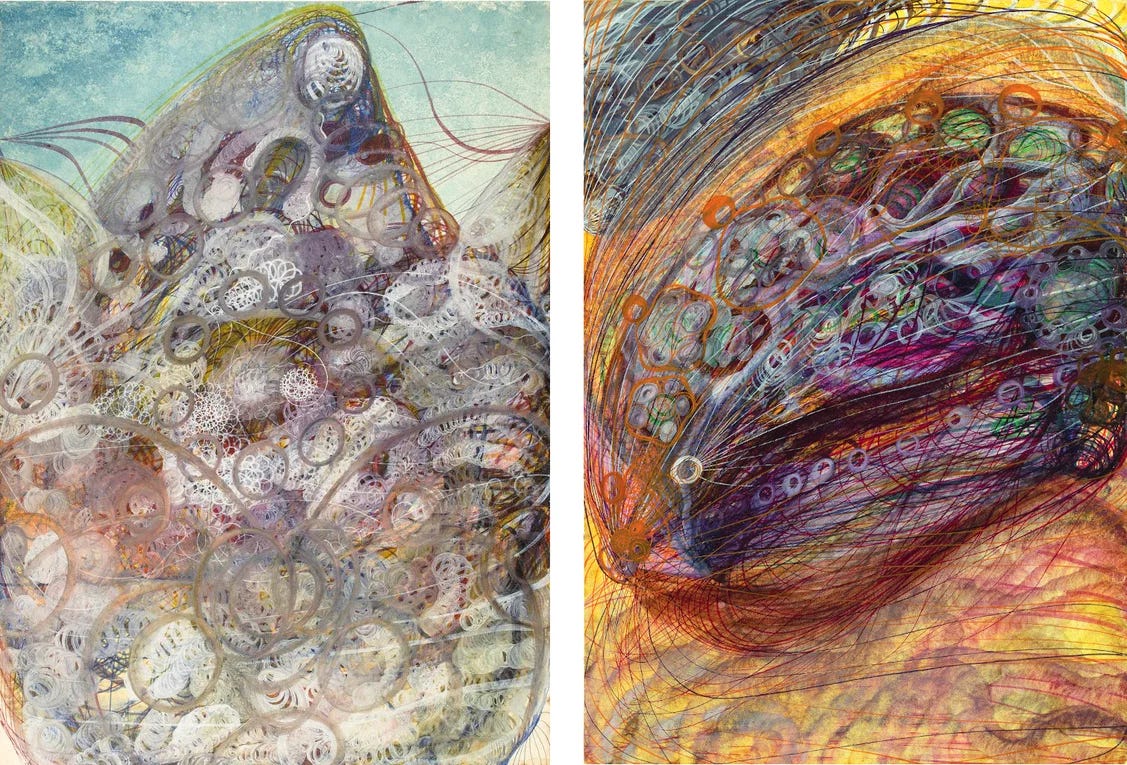
Well, I’m in an era of personal discovery—me, my own flesh-and-bone-existential-mystery—as well as the long furled scroll of my family
which begins at the beginning and could very well end with my children, understandably—end with an exclamation mark after their names to connotate certain climate calamity/human-grade futility.
Or, should my children have their own children, the scroll unrolls on and on from there, a semicolon demarcating the ongoingness of our genetic line; the will to live, to make, to perpetuate, perennial, regardless and despite. We humans, everbearing meadows of wildflower and green, wanting only more and more of one another, forever.
And when I say that my line might soon “end”—to what end? What is a period but a symbol, a dot?
What is full stop? Death certainly is not. The simple fact of my children is a quantum portal. Every meet-cute-egg-and-sperm a prelude, a real-time Jack and the Beanstalk. Magic egg, magic sperm, magic beans. We root here and extend heavenward. We are, all of us, mysterious.
And I know I am a fool to think I have any control, but Dog help me, if my anscestral line continues for even one generation beyond these white-light children, I want to know I made some thoughtful decisions.
Provisions. When the tides rise, and the crops fail, let it be known that at least I tried to think through what this would all mean—
the wars over water, bombs falling like stars, the robots, the gluttonous, the hungry, the scarce, the finite. The, Once upon a time there were oranges. Once upon a time lived a beast called a polar bear. Once upon a time we swam the river, we ate the fish, we drank the water.
Can you believe it?
And yet: the beauty, the beauty, the everlasting beauty! The wind through the Trembling Aspen, the Sugar Maple, the trees, the trees!—and God willing, the bumble and honeybees, and the owls and the moths and the sweet skunks and the fat earthworms and the dogs who lay on our feet and warm them as we read and write, in situ, in peace.
Biblical Noah made few friends, I’ll bet, and his story is furrowed and unrepeatable. He really didn’t live in the moment, so hyperfixated was he on building this Big Thing. No work/life balance. A “problematic” character. But I do admire his conviction. I guess he wasn’t a people-pleaser. He didn’t doom scroll, he just did the thing. What was his wife up to? Who did the laundry? Who put the kids to bed at night? Did he do it for the kids, or himself, or for God? Does it matter?
“Wayfinding”
Paul Symonds…defines wayfinding as “The cognitive, social and corporeal process and experience of locating, following or discovering a route through and to a given space.” Wayfinding is an embodied and sociocultural activity in addition to being a cognitive process…[and] is a complex practice that very often involves several techniques such as people-asking (asking people for directions) and crowd following and is thus a practice that combines psychological and sociocultural processes. (straight outta ye olde Wikipedia)
So if our lives are like scrolls, unfurling, maybe they’re maps, too? I guess I’m asking you for directions.
And if you’re alive and juicy and paying attention how can you not worry and wonder about what’s best for our children, about what to do and how to live, what to give the next generations? I guess I’m trying to “discover a route through and to a given space.”
Best in these times to be a cartographer or a hiker? Or best to learn to read the dark night of the soul sky in order to circumnavigate destruction on rafts of our own making?
Or is it best to pull everyone you know close around the bonfire, close enough to whisper, close enough to form a structure with arms extended—long and short and soft and furry and fat and wispy and young and broken—all the arms of everyone, extended? Here is the church, here is the steeple, strong enough for the storm and made up of real people.
And what is wayfinding, when the magnetic north itself is shifting?
Do you stay or do you go, as flood waters rise? Of what or of whom is your ark made?
What I (we) know of anthropocene facts and figures and the human spaces in between and what I (we) do about this knowledge, with my sheltering arms, my own two hands, will impact others. I mean this literally and poetically, both.
Yes, I’m talking about climate change, and widespread technological shifts, and capitalism, and power, and equity, and safety, and freedom, and choice, and the right to bliss, and to kindness—and I’m also talking about life—my own, here at the threshold of midlife—and the lives of the people I have come to love, even painfully so—my family, but also my friends and neighbours.
So what do we do, when the next century, half-century, decade—year, even—remains uncharted? When on the other side of the world’s hottest summer or the next leap in AI is the edge of the map, the “Here be Dragons”? Do we get out the animal skins and the protractors and mapmaker, mapmaker, make me a map? Chart the territory for the children? Find a way through the uncharted wilderness ahead of us through charts and long study and precision?
Q: Where is it safe and viable to live in 2050?
Or do I lace up my hiking boots and, like Noah, throw my body into my theology, phenomenology, go at it full-bore, just give’r?
A: Wherever “I” is “We.”
The flood is coming and most of us know this. And I’m saying it because I’m living it, we all are, and not to be alarmist. And maybe the flood will be somehow beautiful. Poets will try and find the beach glass among the broken bottles, surely.
And maybe everything we no longer need will float to the top and wash away, finally. And yes I’m a poet but I also have kids, so I have to think a lot about the difference between waving and drowning.
Both demand choice. Both are verbs.
And even Noah had to land, eventually.
I came to explore the wreck.
The words are purposes.
The words are maps.
I came to see the damage that was done
and the treasures that prevail.…
the thing I came for:
the wreck and not the story of the wreck
the thing itself and not the myth
There’s always a tertium quid, I just haven’t found it yet. So I burn my candle at both ends. Of course you’re right, it will not last the night. But the night is lovely and dark and deep, and I have promises to keep. And kilometers to go before I sleep.
“The clearest way into the Universe is through a forest wilderness.”
— John Muir
So yes, dear readers, I am wayfinding.
My heart aches from it, this constant straining in the dark, divining how my choices today—where to live, what vocation to invest in, how to spend my time, on what to centre my thoughts—all of the questions that structure the Good Life or the Good Way—and I know I’ll never get it right, there is no “right.” And there are humans in detention centres for the very last time. And there are humans wriggling up to drink from their mother’s breast for the very first time.
It’s everything, everywhere, all at once.
I realize that this is the human condition. I know there is nothing new under the sun. I recognize this is Noah-level narcissistic, to think I can think of everything, plan for every pitfall and possibility. To think I can protect my children, future generations, based on my own flailed attempts at kinesthetic divination and hard-won calculation. But I also know what it feels like to follow an instinct and commit to a path.
There’s an ache and a whisper and a body yearn, and if you don’t attend to this longing, it dissolves. And yes, you can be okay, anyway, even if the whisper dies out to your ears. But if you do attend?
…
Sometimes a way opens, and you realize you already have everything you need. And you move forward, one merely human foot at a time, over scree and sandbank. And the wind is at your back. And the wind is in your face. And the path unfurls before you, even as you make it. And you leave footprints like breadcrumbs behind you. All the way into the deep deep heart of the deep deep forest.
All the way back home.
FODDER
#1:
On our electric vehicle roadtrip, we met some kindred spirits (at a Tim Horton’s charging station, no less!). Check out Melanin Electric Roadtrip to follow the story of Ella, her daughter and their dog as they travel cross-country from Montreal to Vancouver to Jasper and back in their all-EV VW campervan!
From their site:
“MELANIN ELECTRIC FAMILY ROADTRIP is Canadian travel series documenting one family's cross-country van life journey. We're filming the real thing — the national parks, the prairie skies, the charging stops, the campfires, the moments my daughter will remember forever. Warm, honest, inclusive and joyful. This is Canada through our eyes.”
#2:
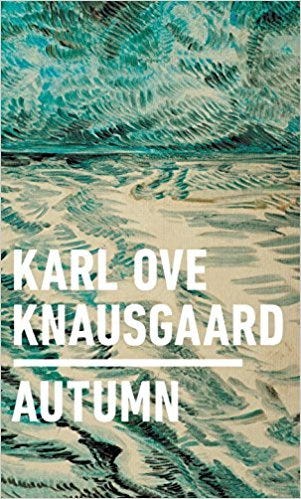
Welp, I’ve finally discovered Karl Ove Knausgård. I hear he’s a little controversial and also widely read. I didn’t know that when I cracked the spine. Way to be human like everybody else, Karl! For what it’s worth, I’m enjoying the book.
MY ART/EVENTS
I’ve mentioned this here and there, but wow! how fun it was to guest on episode 4 of my dear pal and longtime collaborator Shannon Linton ‘s podcast, Make Like a Mother ! You can read the transcript at the site, listen to the podcast wherever you listen to podcasts, or watch the video version (mine and all the incredible artist-mother guests!) on Youtube.
And finally, in the way Substack does, I’ve connected with an old friend of mine, Rae McMinn who writes the Substack, In No Time at All.
We first met eons ago at another significant time of life transition—our very early 20s—and I can honestly say that the intersection of our lives wrought great personal change in me, and upon the entire direction of my adult life! If you’re into poetry, check her out—her work is deeply moving.
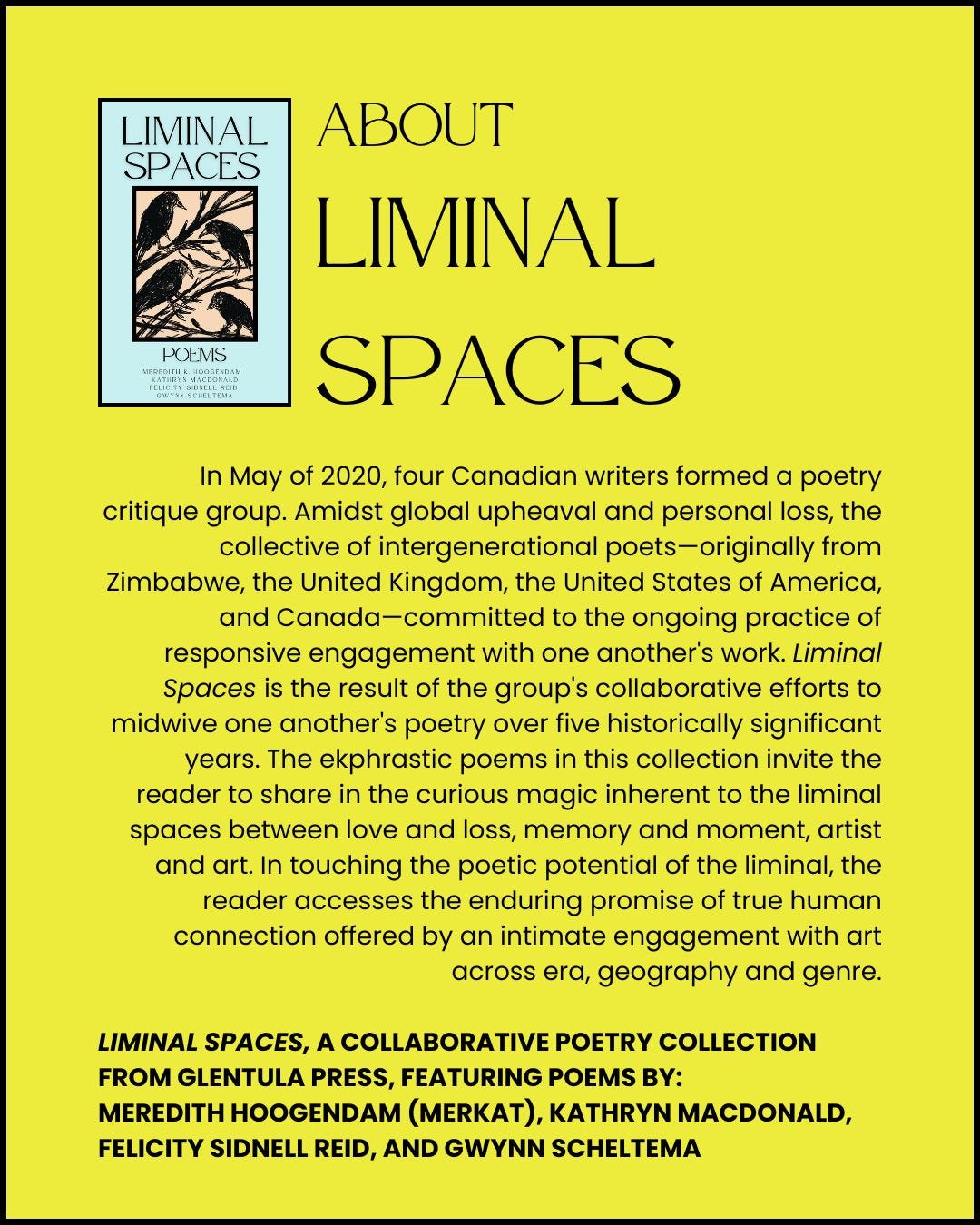
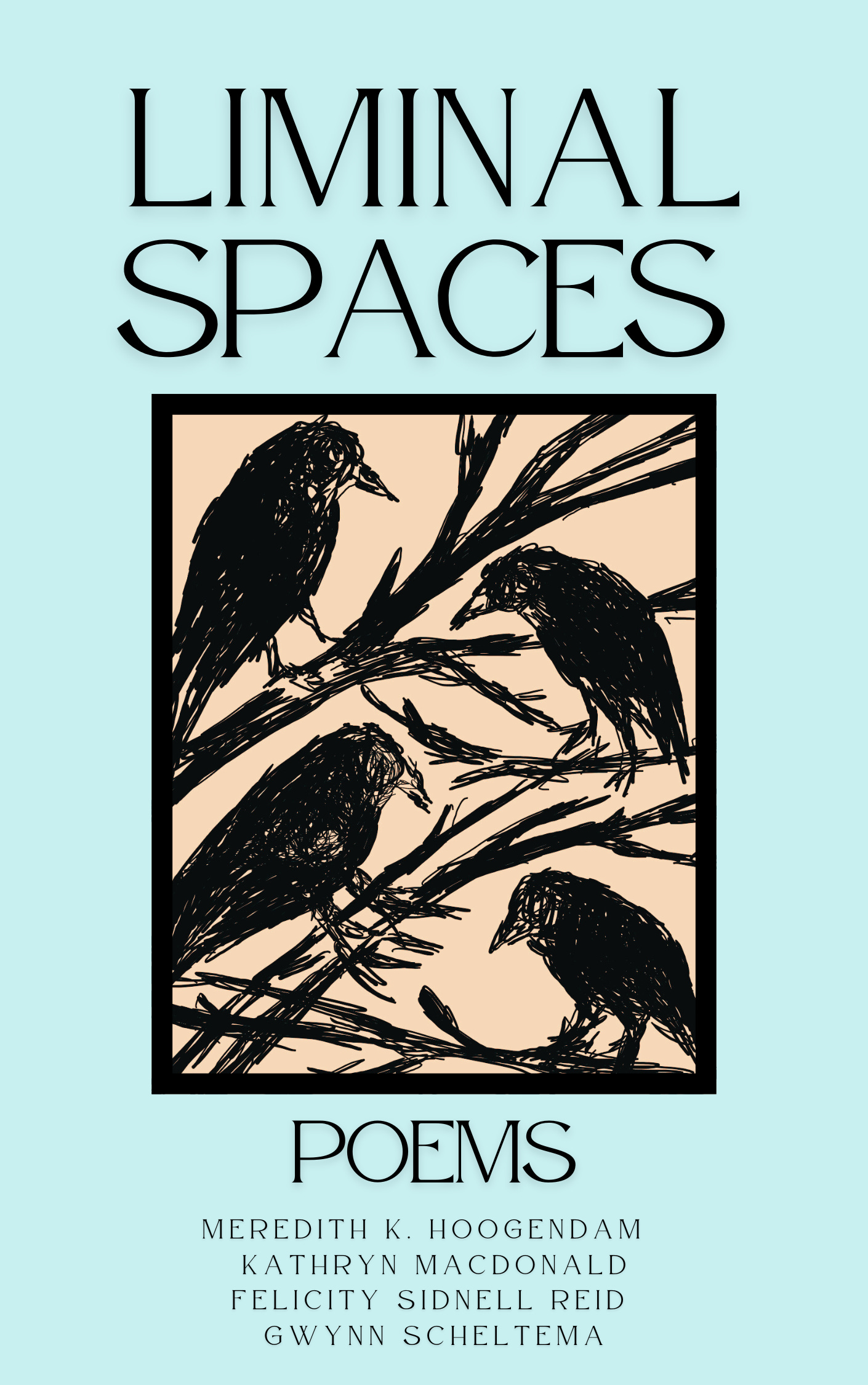
One of her [gorgeous] poems, “Holy Trinity,” brought to mind “Cabin Poem” from my most recent collection, Liminal Spaces (mentioned in the podcast, above) in the sense that both are semi-autobiographical, and both hint at the jaw-dropping numinosity of everyday life.
Sometimes wild and inexplicable things just happen, and these moments remind us of how little we humans grasp of the nature of reality. I love this wild and uncharted stuff, and how it connects us all!
And in one more Substack-related writerly human connection, my experience detailed in “Cabin Poem,” is so akin to what Great Lakes bioregion writer and artist Emily Wick writes about in her essay, “Crazy Flight” from her Substack, What is Woven In, that I immediately subscribed to her work upon reading—one of my earliest subscriptions on this platform!
So if you’re still with me here (whew! THANK YOU FOR YOUR TIME!), why not check out my poem, below, and then go on and read both Wick’s essay and McMinn’s poem, “Crazy Flight” and “Holy Trinity”?
I promise, it’ll be a triple-whammy Dude, life is super weird and wild and wonderful!!! moment—and who among us doesn’t need some reminding of the weird and wild and wonderful these days?
CABIN POEM
Meredith Hoogendam
after Jim Harrison, “Cabin Poem” Jim Harrison: Complete Poems.
“I’ve decided to make up my mind about nothing.” - Jim Harrison
I.
I’m not a fan of organized
sports, but I love to observe
the game’s conclusion, when
players line up, one by one
in procession and,
face-to-face with their opponent,
each raises a hand,
meets the other.
Palms linger,
depart.
II.
When you drive to the cabin
don’t take your fancy car,
the hill is steep and rutted
with old boulders,
and as you decline
your mirrors
are brushed by a procession
of heavy old boughs, the hands
of ancient pines.
III.
When we first bought the place,
we didn’t know the cabin
was an island, surrounded
by an ocean of poison ivy.
It was late autumn then and
our eyes were coloured by a lust
for wilderness.
We wouldn’t have noticed the threat
had it wrapped its hands
around us.
IV.
After weeks away, I enter the cabin
to find that a large grouse
has catapulted herself through
the old single pane window, fallen, and
skittered several feet across the floor below.
Later that evening, reading
a Jim Harrison novel,
the character enters her cabin
to find that a large grouse
has catapulted herself into
the old single pane window, fallen, and
skittered several feet across the ground below.
I gasp in stunned recognition, clasp
the covers shut with both hands.
The force of the act
drops the book to the floor.
Now skin to skin
and without a story
between them
My palms touch.
Mirrored, my hands
resemble prayer.
If you like my work, find this collection and more at our indie bookstore, Reader’s Nook, or by contacting me directly, here! I am AI-free and proud to be & I don’t sell on %$#@i$* Am@$%n.
As always, with gratitude!
MERKAT
I love your words. Years ago when I was writing about trail running, I came across a marvellous word: “waywiser.” It’s an old-fashioned term for a pedometer or odometer (or a GPS) or anything that you can use to measure your progress. For me it was: “I used to think I could run 100 kilometres, but I’m waywiser now.”
I love this. And I love cabin poem. And I am so grateful to have a line that connects us again